

Bespoke Kitchen Renovation in Essex: What Makes a Truly Custom Kitchen - and How to Plan Yours

The word bespoke is used freely in kitchen design, and this has made it almost meaningless. A kitchen assembled from a manufacturer's range, however broad that range, however carefully selected the components, is not bespoke in any useful sense. It is configured. Bespoke means something specific: designed around one household, in one home, for one set of daily patterns that no off-the-shelf system was built to serve.
For homeowners in Chigwell, Loughton, and the wider Essex fringe currently planning a kitchen renovation, this distinction matters — not as a philosophical point, but as a practical one. The difference between a configured kitchen and a truly bespoke installation is felt in the years after completion, in the way the space works during a Sunday morning, a weekday evening, and everything in between.
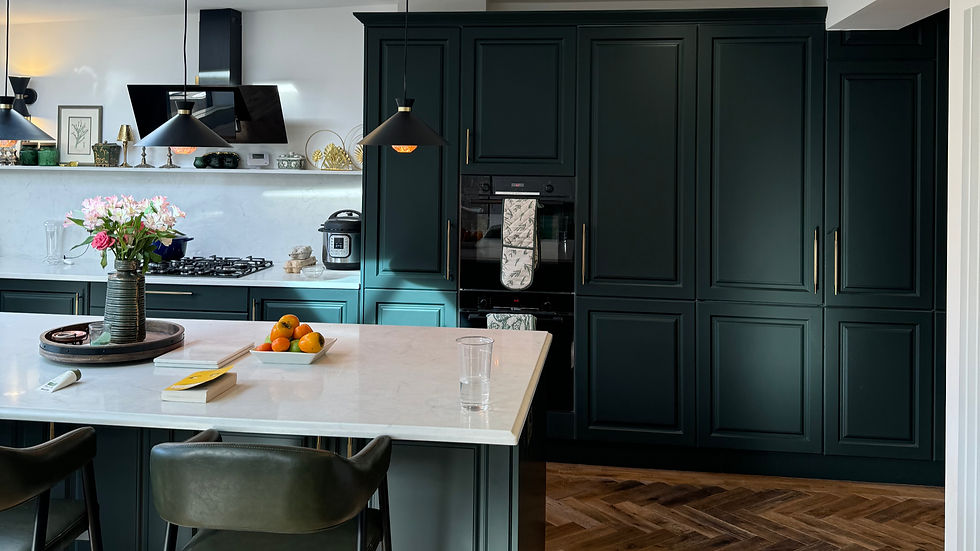
What Bespoke Actually Means in Kitchen Renovation Design
A genuinely bespoke kitchen begins with how a specific household uses the space. Not how kitchens are typically used. How this family, in this home, with these routines and this number of people, actually moves through the room.
That means understanding whether the kitchen is the social centre of the home or a working space that needs to function efficiently and then close off. Whether the homeowner entertains formally or informally. Whether a large larder unit is more valuable than an additional run of wall cabinets. Whether the island should seat four or serve primarily as a preparation surface. Whether integrated appliances are a priority or whether a range cooker is non-negotiable and should anchor the whole scheme.
These questions cannot be answered from a brochure. They require a conversation — and that conversation shapes every specification decision that follows, from the profile of the door front to the material of the worktop to the position of the sink.
The Planning Process: From Design Consultation to Completed Installation
The Migss approach to a bespoke kitchen renovation moves through four distinct stages, each of which depends on the one before it.
The process begins with a design consultation: a detailed conversation about the household's patterns of use, the brief, and the home itself. Measurements are taken, but the consultation is not primarily a measuring exercise it is a design exercise. The aim is to establish what the kitchen needs to do before any decisions are made about how it looks.
Design development follows: drawings are produced, specifications are assembled, and materials are selected in the context of the specific scheme. This stage produces a kitchen design that is genuinely particular to the home; not a configured option presented as custom.
Supply and installation are then managed by a single team. This coordination is not a minor operational detail. In a bespoke kitchen renovation, the relationship between the cabinetry, the worktop fabrication, the appliance integration, and the tiling and decorating is too complex to be managed across multiple independent trades without a single point of accountability. Aftercare, snagging, adjustments, and ongoing support, completes the process.
Specification Decisions That Define Longevity
In a bespoke kitchen, the specification choices that have the greatest long-term impact are rarely the ones that generate the most conversation in the planning stage.
Door front material and finish choice tends to dominate early discussions, and rightly so - it defines the kitchen's visual character. But the decisions that determine how the kitchen wears over a decade are often more structural: the internal fitting of drawers and pull-outs, the quality of the hinge and runner hardware, the worktop material and its edge profile, and the integration of lighting within and above the cabinetry.
Migss works with a curated selection of suppliers across all of these categories - not to constrain choice, but to ensure that every component specified has been assessed for quality, compatibility, and longevity. A bespoke kitchen should look as considered in ten years as it does in the first week.
Why Coordinated Project Management Changes Everything
An independent kitchen renovation - one where the homeowner coordinates separate trades for fitting, worktops, tiling, plumbing, and electrics, is a demanding and often stressful process. Sequencing errors are common. When they occur, the cost is measured in delays and in remedial work that could have been avoided.
A coordinated bespoke installation removes that burden. One team, one sequence, one point of contact for every stage of the project. For Chigwell and Loughton homeowners undertaking a significant kitchen renovation, that coordination is not a luxury, it is what makes the project manageable alongside the demands of daily life.
The Right Starting Point
A bespoke kitchen renovation in Essex is a significant investment. The right starting point is not a showroom visit or a brochure, it is a design consultation with a team that will spend the first meeting asking questions rather than presenting options.
That conversation is where the renovation begins. Everything that follows it, the specification, the materials, the installation, is the execution of a brief that was established properly at the start.


Comments