A bathroom renovation in Hampstead rarely begins with a blank room. More often it begins with a high ceiling, a tall sash window, a run of cornicing and walls that have settled gently over generations. The aim is not to erase any of that, but to bring a modern, well-engineered bathroom into a room that still feels as though it belongs to the home. This guide explains how we approach that balance, why the specification matters so much before work starts, and what you can expect from the process.
Why period bathrooms need a different approach
Period homes were not built with modern bathrooms in mind. Many bathrooms in Hampstead occupy what was once a bedroom or dressing room, which brings generous proportions but also some practical questions. Suspended timber floors need careful assessment before a stone bath or a level-access shower goes in. Older walls are rarely true, which matters when you want large-format porcelain or book-matched stone to sit cleanly. Original pipework and wiring may need replacing entirely rather than extending.
None of this is a reason for concern. It simply means the thinking has to happen early. A considered renovation looks at the structure, the services and the room's original features together, so that the finished bathroom works properly for years and the character of the room is protected rather than worked around.
Deciding what character to keep

The first conversation is usually about what the room already offers. Sash windows, cornicing, ceiling roses, picture rails, original doors and architraves can all be retained and restored. Sometimes original floorboards can stay visible in part of the room, with a fully waterproofed wet zone elsewhere.
Keeping character does not mean recreating the past. Some of the most successful period bathrooms pair original features with a restrained modern finish: a freestanding bath beneath the window, a walk-in shower set discreetly to one side, and joinery that conceals pipework and cisterns. The question is less about era and more about proportion, so that new elements sit comfortably within the room's existing lines.
Materials that sit well in a period home
Material choice is where a period bathroom earns its quiet confidence. Natural stone, such as honed marble or limestone, has a softness that suits older rooms, though it needs correct sealing and an understanding of how it will age. Porcelain offers durability and consistency, and today's large-format surfaces can echo stone convincingly with less maintenance. Encaustic-style tiles, panelled walls and painted joinery can also reference the home's history without imitating it.
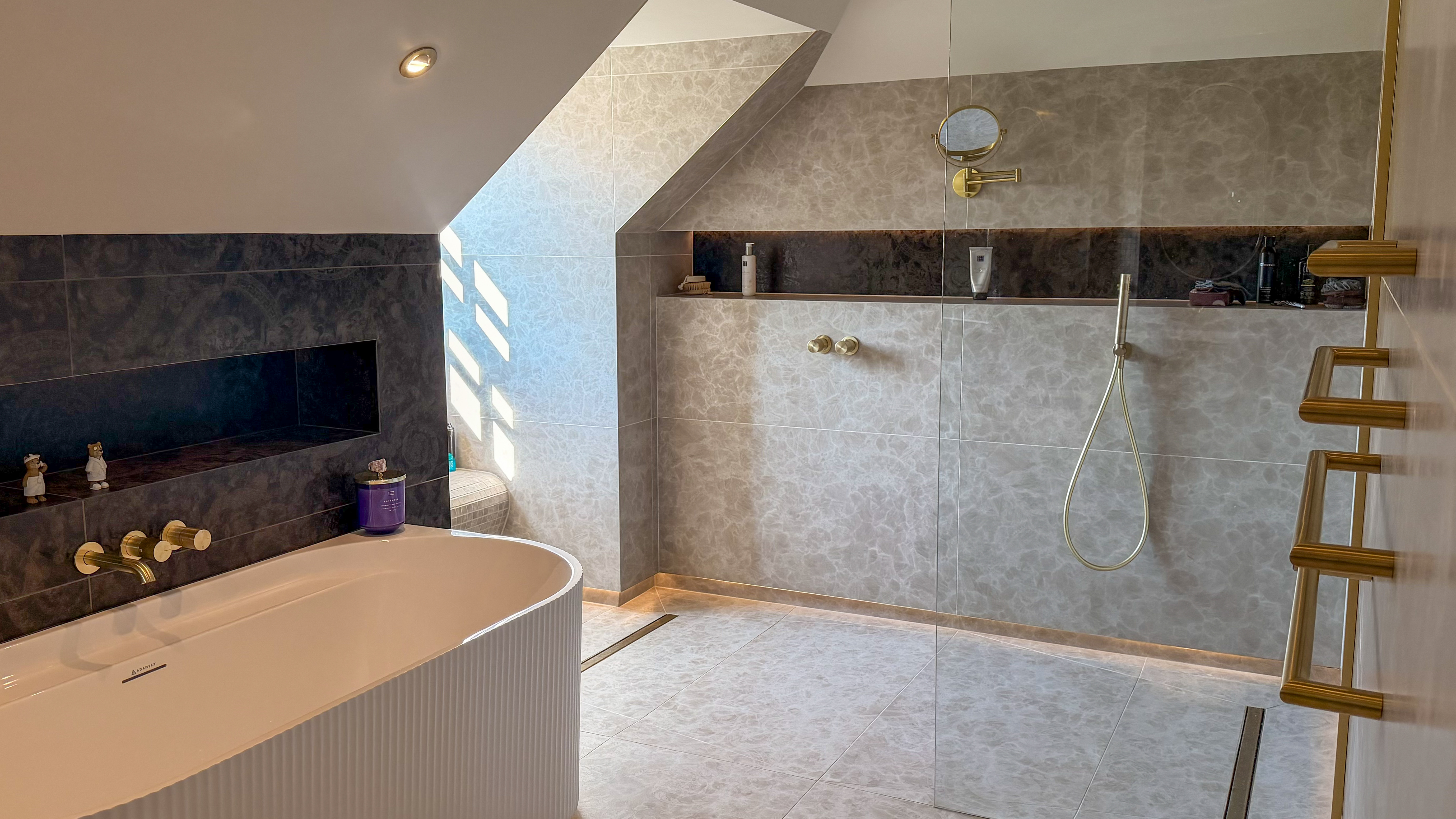
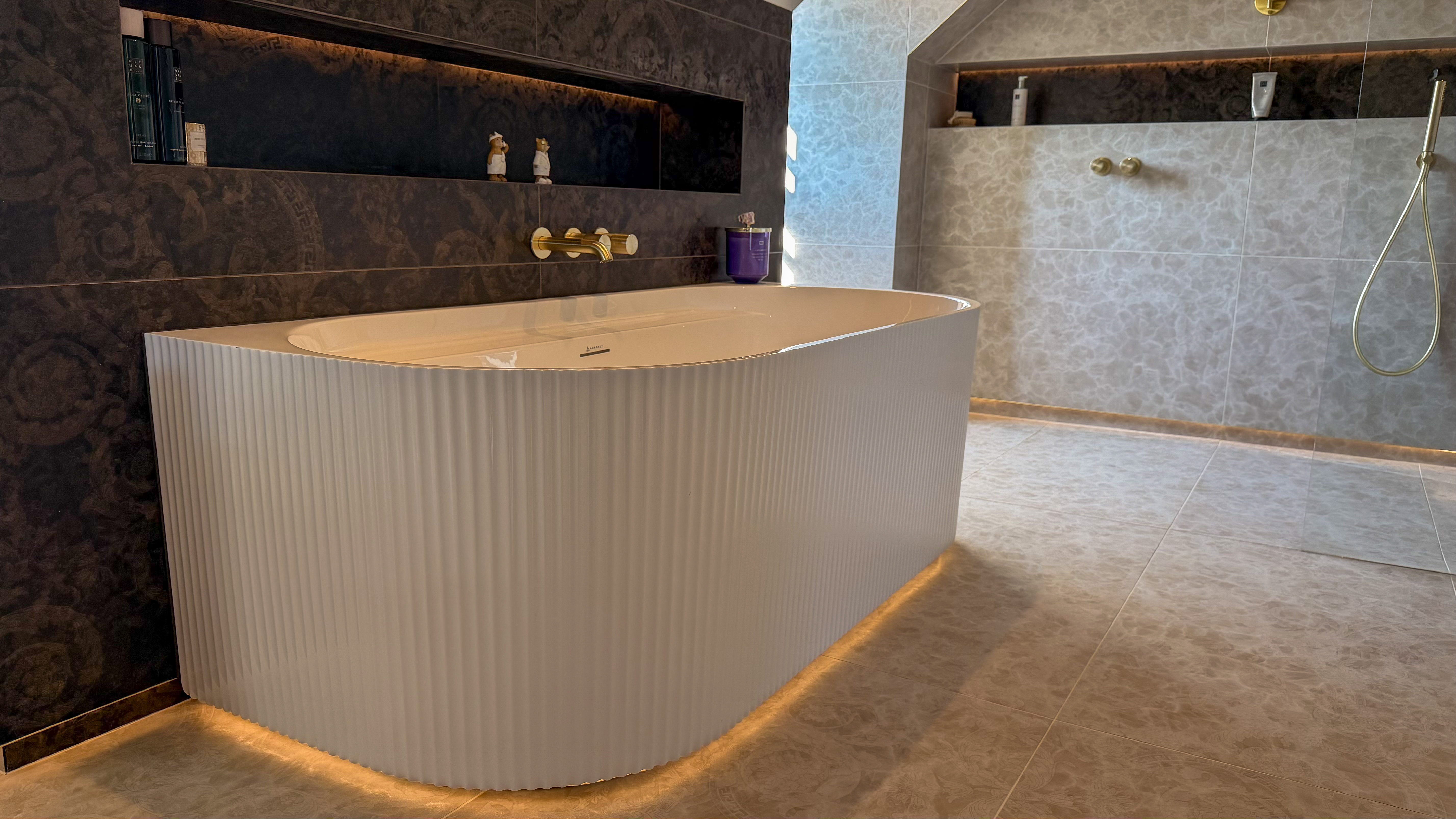
Brassware deserves the same care. Unlacquered brass will patinate over time, nickel holds a warmer tone than chrome, and exposed thermostatic valves can suit a traditional room well. Lighting should be layered: a soft overall light, considered task lighting at the mirror, and perhaps low-level lighting for evening use, all rated appropriately for the zone in which it sits.
Our team works across porcelain, stone and premium surfaces regularly, so we can advise on how each will behave in your particular room, not just how it appears in a showroom.
Specifying the finish before work starts
The most reliable way to protect both the character of the room and the quality of the finish is to decide everything before the strip-out begins. That means agreeing tile layouts and setting-out points, grout colours, brassware finishes, valve and outlet positions, niche dimensions, lighting positions and joinery details in advance.
When the specification is settled early, the proposal can be fixed against that scope. If you change your mind later, which is entirely reasonable, the change is documented clearly as a variation, so there are no surprises. Materials are then ordered during pre-installation and lead times confirmed, which means the team arrives with what it needs rather than waiting part-way through.
If you are working with your own designer or architect, we are glad to collaborate. Our role is to translate the design intent into a buildable specification and then deliver it faithfully.
Listed buildings and conservation areas
Many period homes in Hampstead are listed or sit within conservation areas, and that can affect what is possible, particularly where work touches structure, external walls, windows or ventilation outlets. Internal alterations to a listed building may also require consent. Bathroom work involving drainage, electrics and ventilation is generally subject to Building Regulations as well.
This is general guidance only. We always recommend checking with your local planning authority and building control before work is agreed, so that the specification reflects any requirements from the outset.
One accountable in-house team
One of the most common worries we hear is about trades who disappear part-way through, or a finish that falls apart at the details. Our answer is structural. Migss Interiors has worked since 2001 with a fully in-house team of 20+ fitters and no subcontractors. The same hands that strip out the room also handle the plumbing and electrics, the tiling, the carpentry and joinery, the plastering and the decorating.
That means one firm, one contract and one accountable team. A senior member of the team visits for the design consultation, and you receive regular updates during installation. Across 600+ projects, around 70% of our work has come through referrals, and we hold a 5.0 Google rating.
Our workmanship is backed by a 10-year labour guarantee. It excludes product failure: fittings and materials are covered separately by their manufacturers' warranties.
What to expect from the timeline
Most of our bathroom renovations take 2 to 4 weeks from rip-out to final snag. More involved projects can take up to 8 weeks, depending on specification, complexity and size. In a period home, factors such as replacing old services, levelling floors or restoring original features can influence where a project sits within that range, which is another reason we settle the specification early.
At the end, we walk through the finished room with you, address any snags and provide a handover pack. Aftercare continues once the work is complete.
Beginning the conversation
Every period bathroom is different, and the right approach starts with seeing the room itself. If you are considering a bathroom renovation in your Hampstead home, we would be glad to visit, understand what you would like to keep and talk through the possibilities.
Book a design consultation and a senior member of our team will come to see the room with you.